
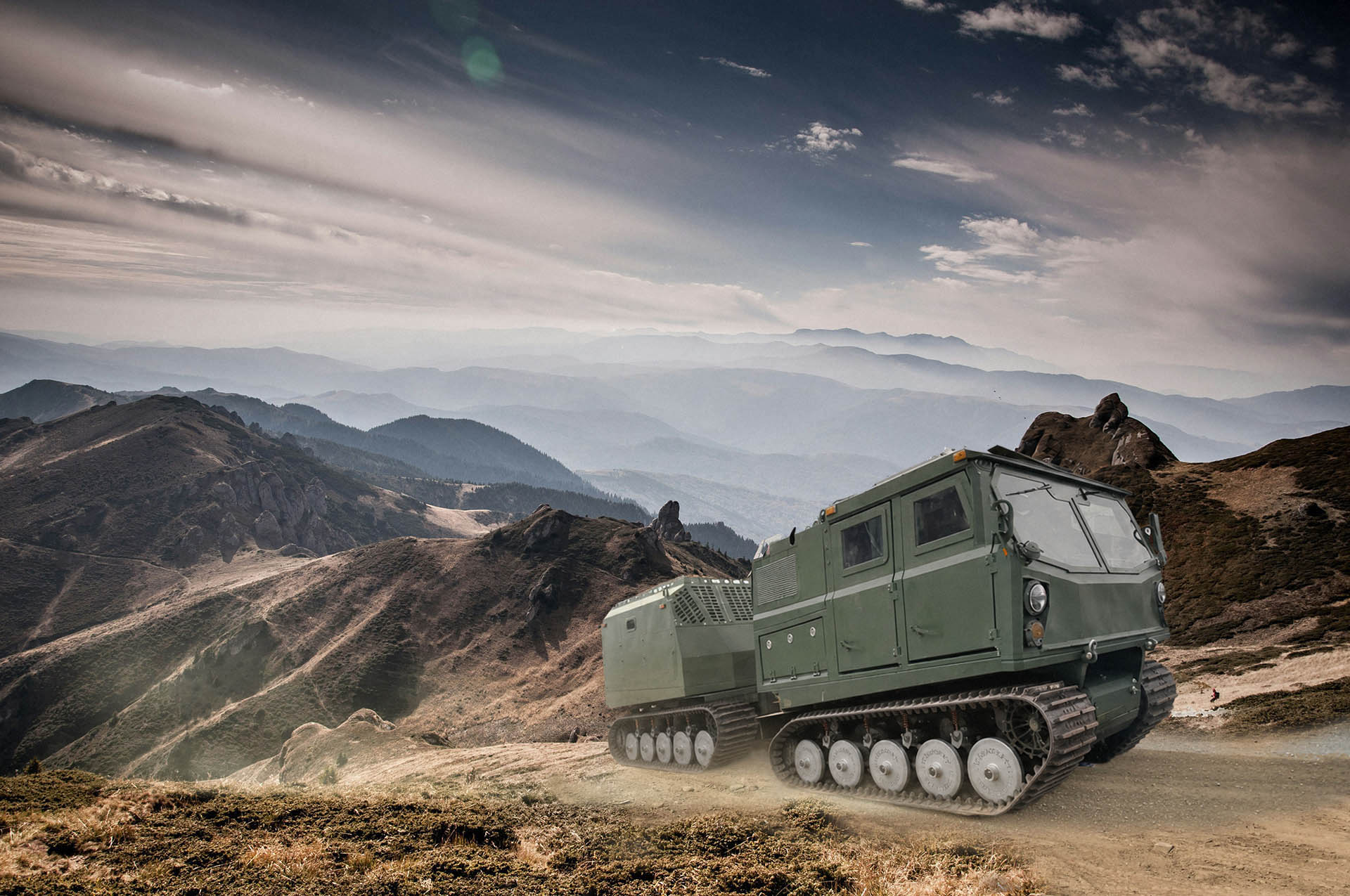
Arctic sovereignty patrol
Sustained long-range presence across snow, ice and complex Arctic terrain.
Applications & missions
◆Defence
◆Civilian
Filter by role
Sustained long-range presence across snow, ice and complex Arctic terrain.
Low-signature access to routes and objectives wheeled vehicles can't reach.
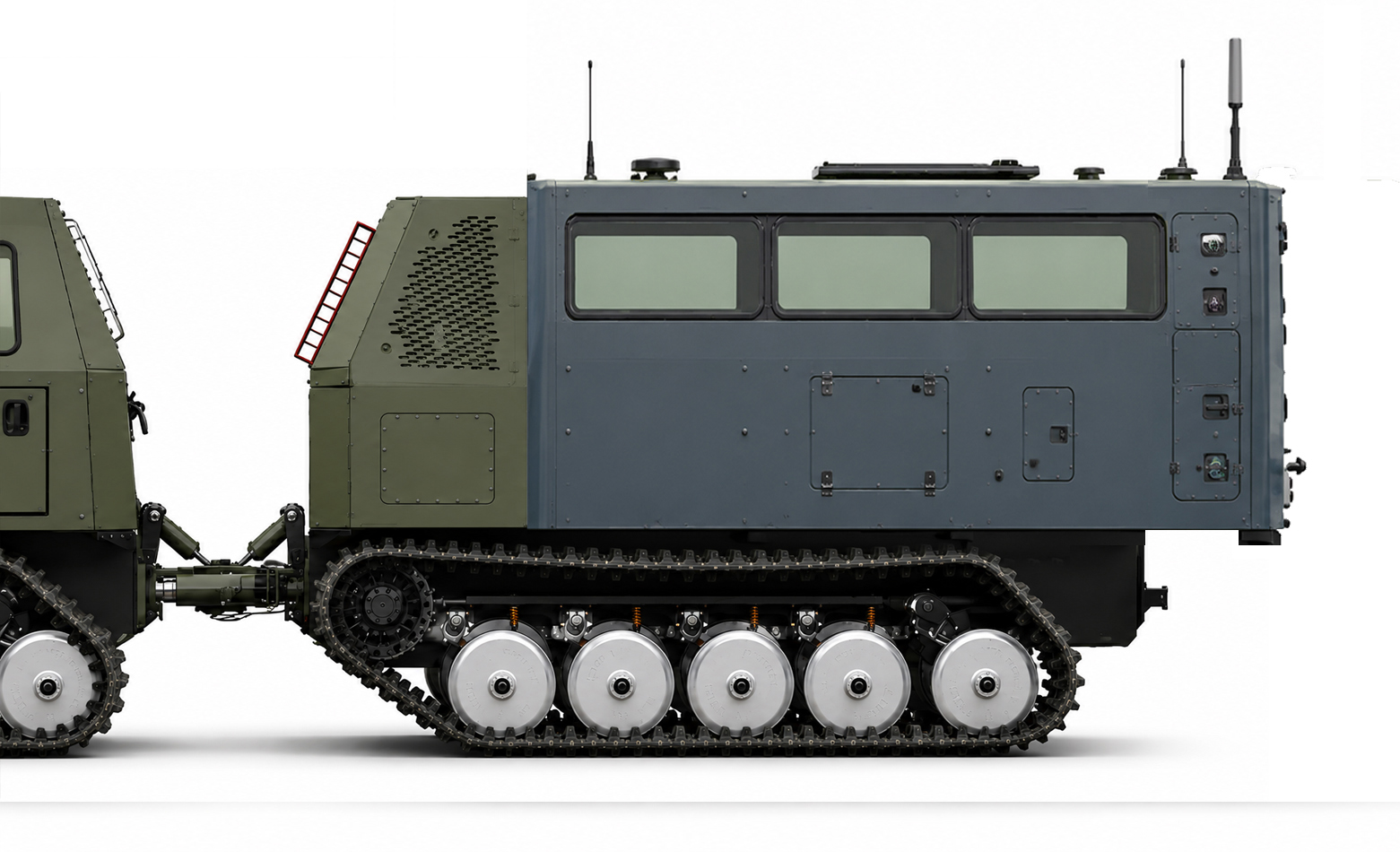
Configurable rear car for command posts and comms nodes, powered by the onboard APU.
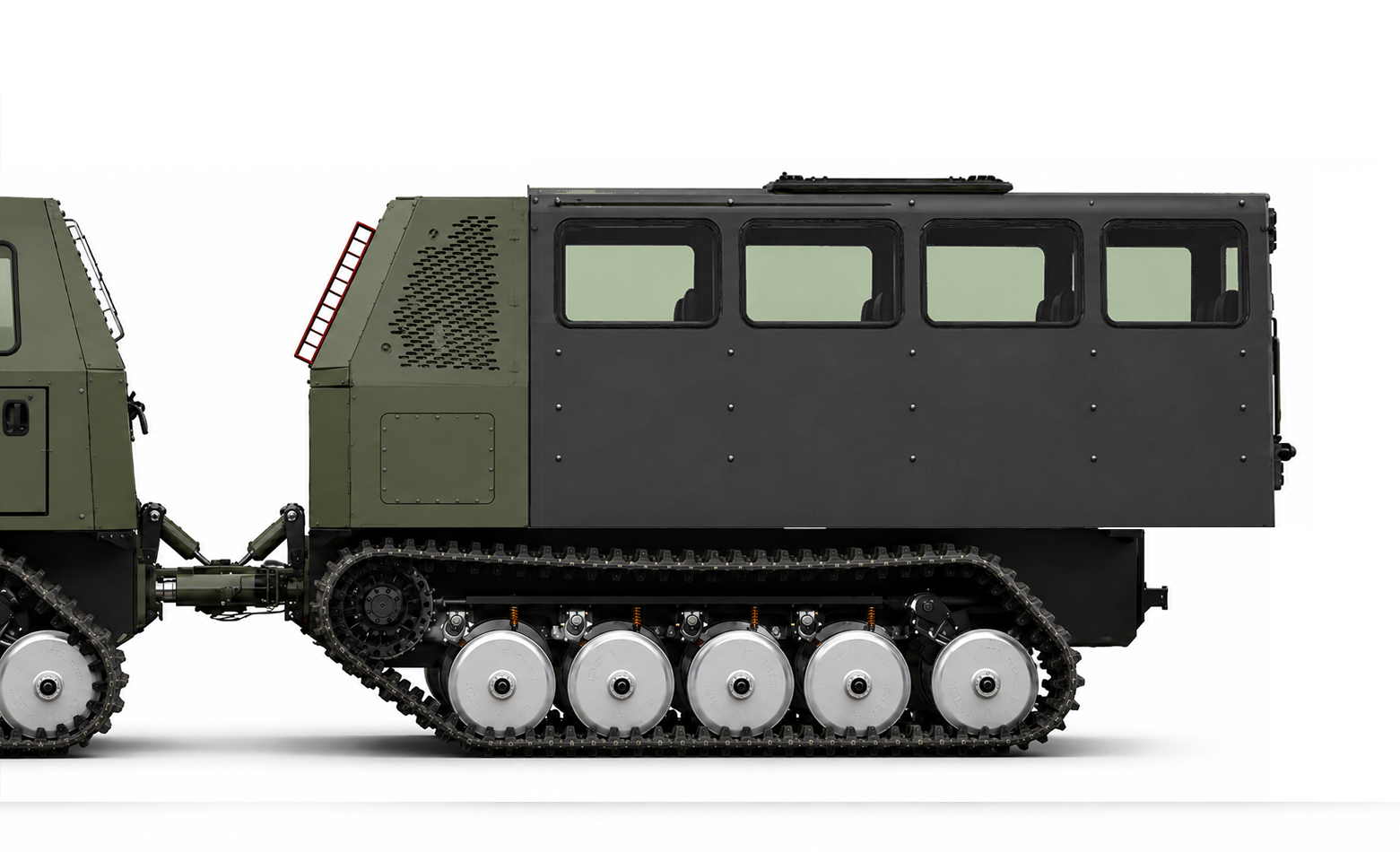
8-person standard cab, extendable to 10–12 personnel, thermally isolated from propulsion.
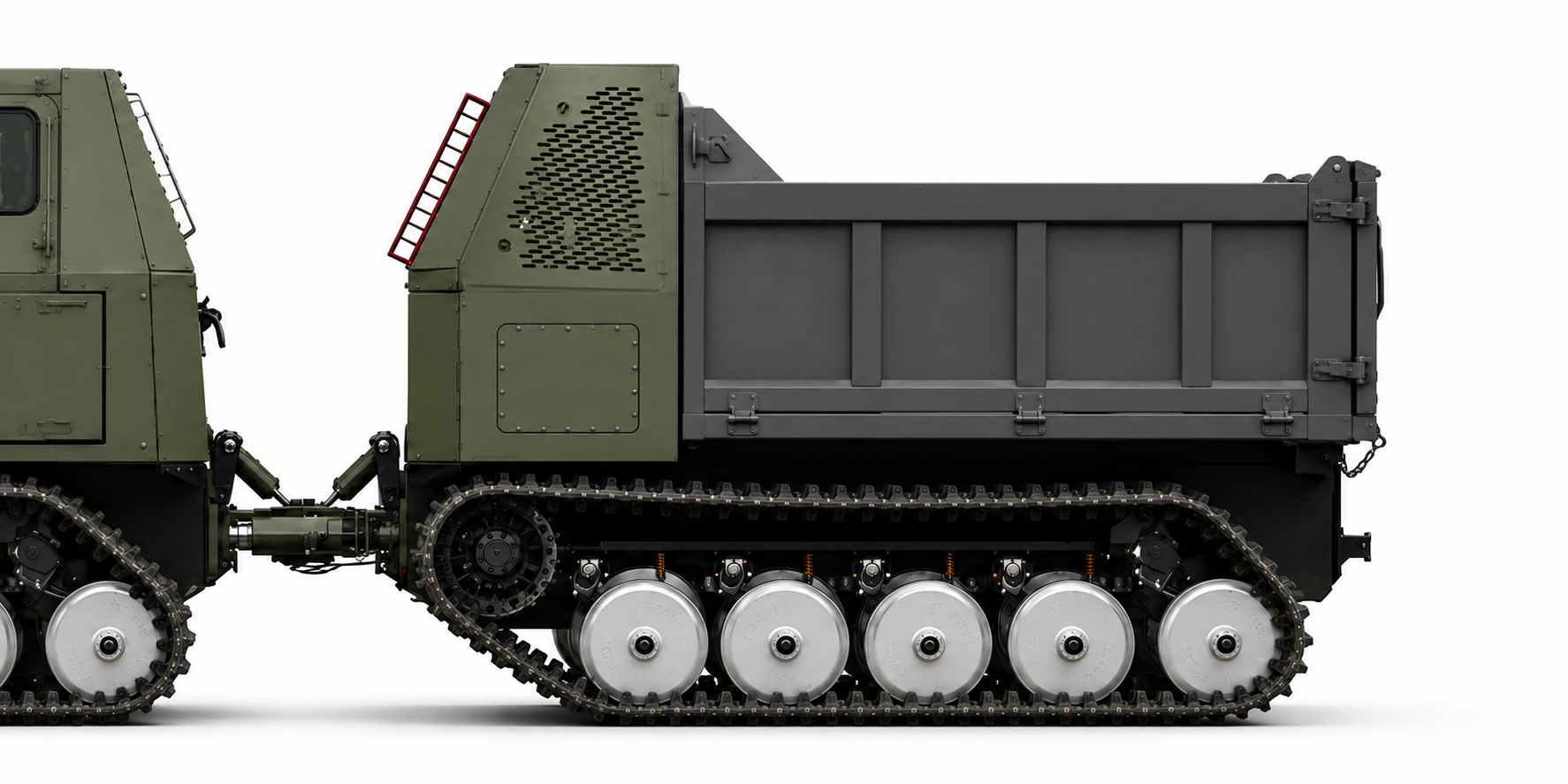
Forward-area resupply for cargo, ammunition, fuel, medical stores and mission gear.
Sealed hull with tracked water propulsion for coastal, littoral and shoreline operations.
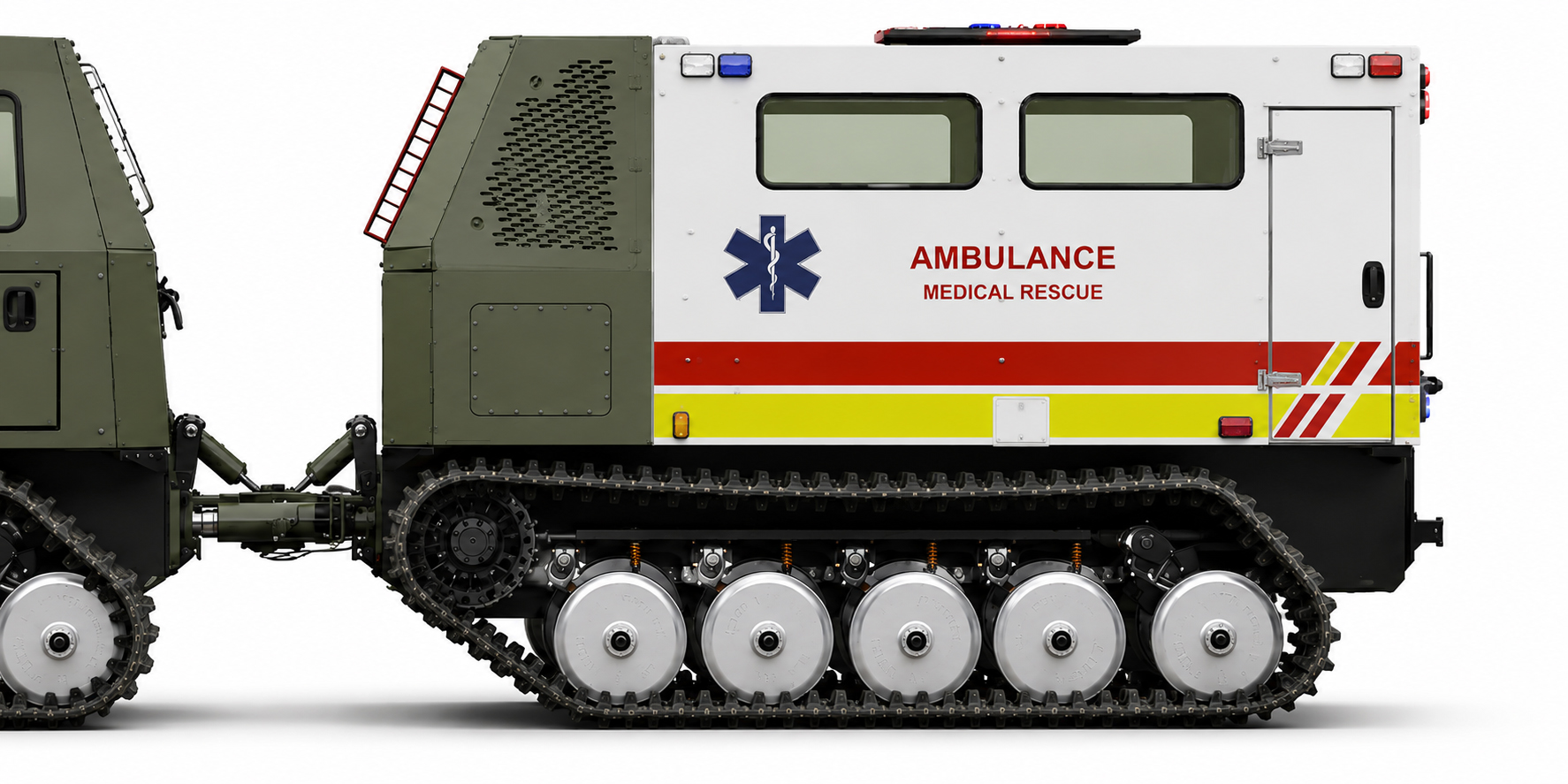
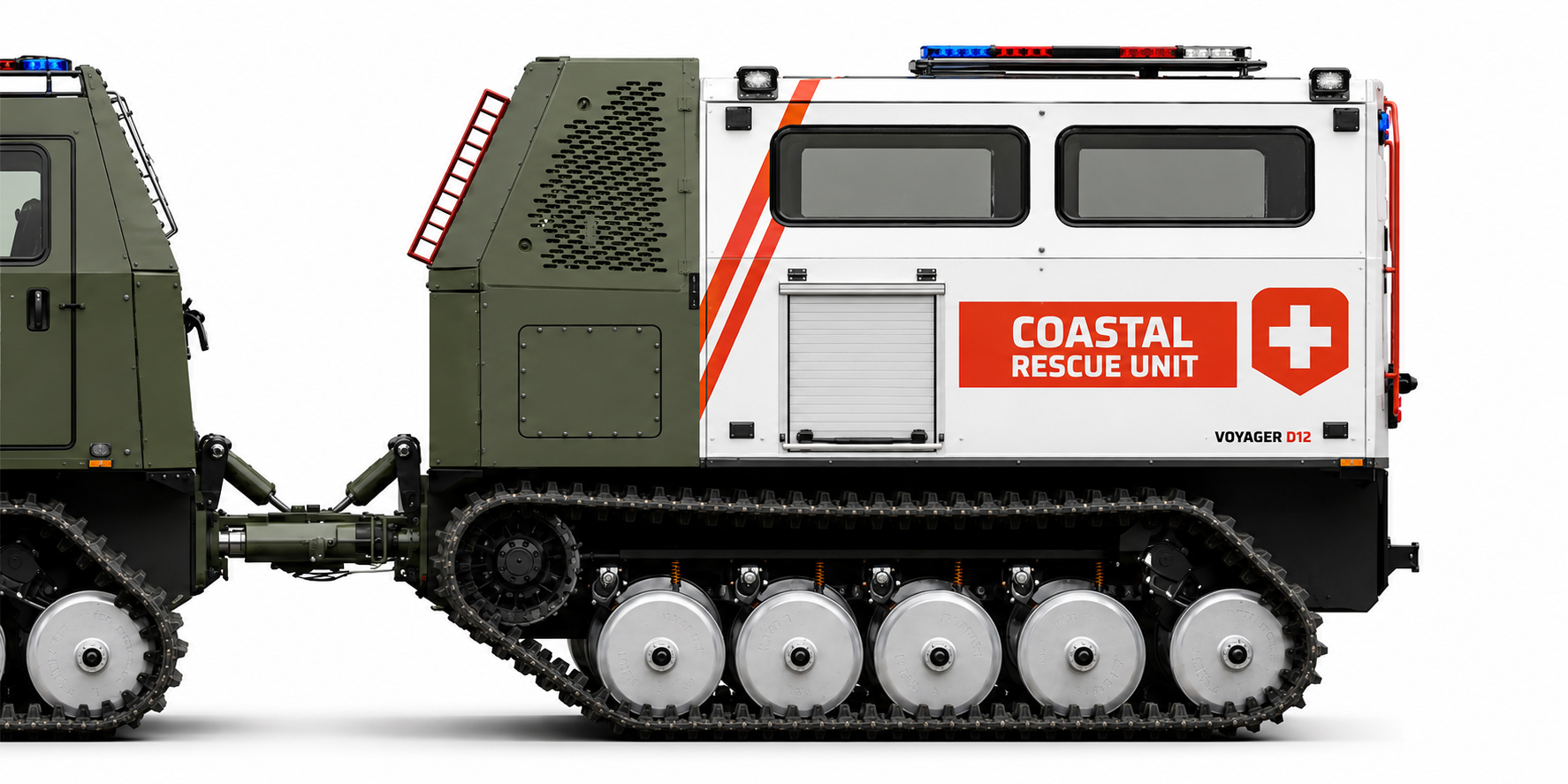
Stretcher-configurable cab with rails and independent APU for medical equipment and climate.
Persistent cross-terrain patrol for northern, coastal and wetland borders.
Reach zones cut off from wheeled transport with people, equipment and exportable power.
Engineered around deep-cold cab isolation, cold-start behaviour and mission power management.
Reach victims cut off by snow, flood, wetland or shoreline; APU runs on-scene equipment.
Amphibious carrier for coastal patrol and marine-adjacent operations across ice, water and rocky beaches.
All-terrain platform for provincial and municipal emergency-management agencies, year-round.
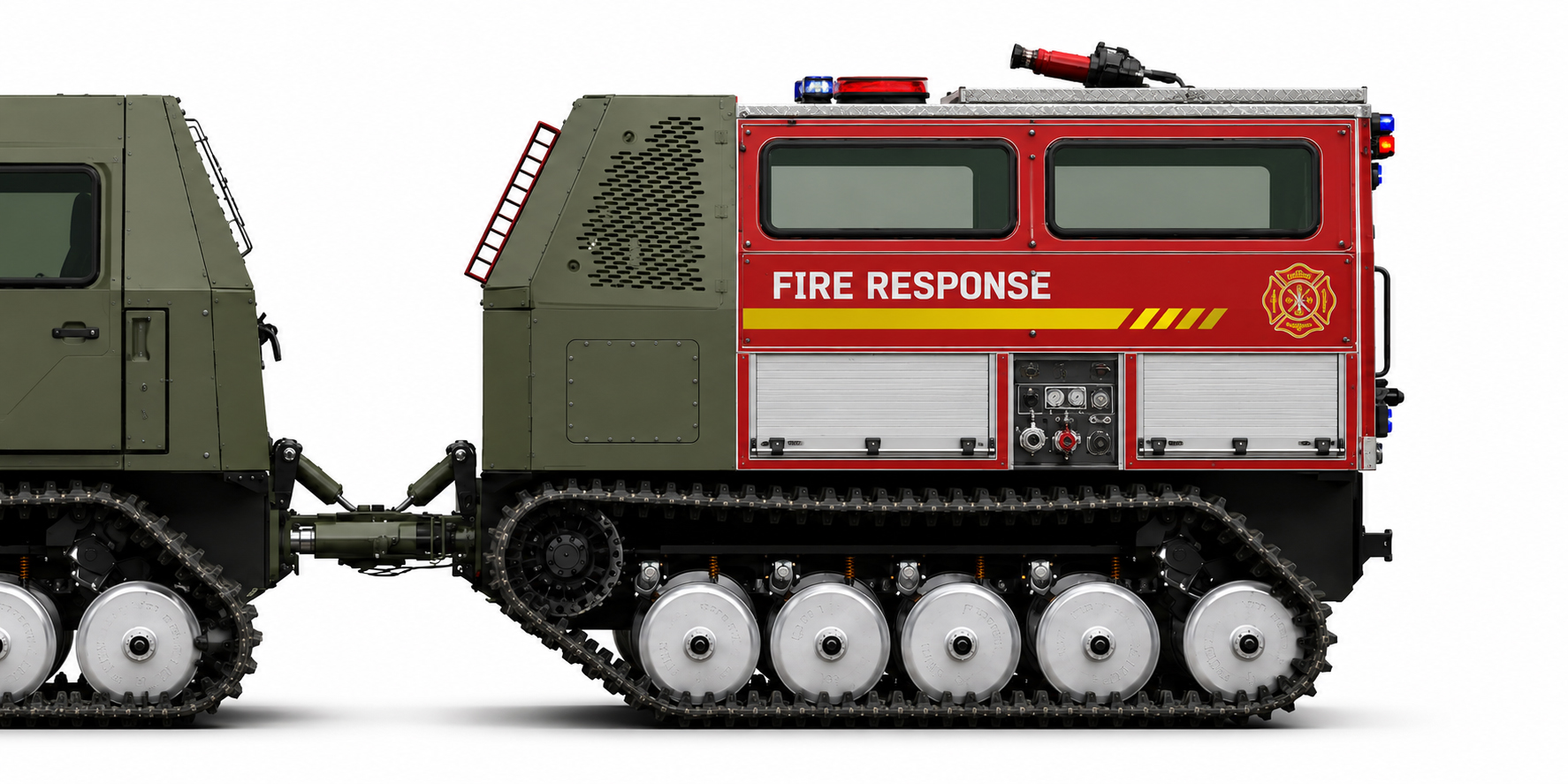
Access flood, storm and wildfire zones with crew, gear and exportable on-scene power.
All-terrain access for tactical teams and remote intervention beyond wheeled response.
Utility crew transport and line-work access across muskeg, snow and remote right-of-way.
Personnel and equipment mobility where seasonal ground and water conditions limit trucks.
Low ground pressure for remote forestry and fire-response sites with minimal terrain damage.
Reliable seasonal access to remote municipal and provincial infrastructure.
Community access, medical transport and emergency response where road and air options are limited.
Customer-defined rear modules — sensor/EW packages, medical labs, mobile power stations and more.
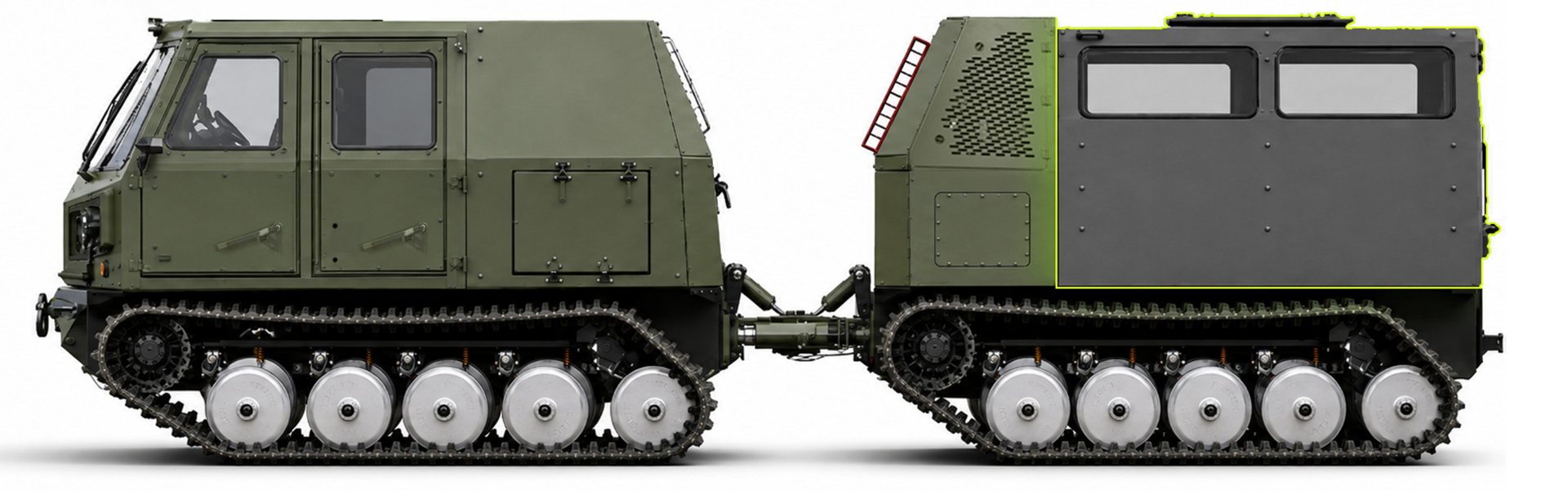
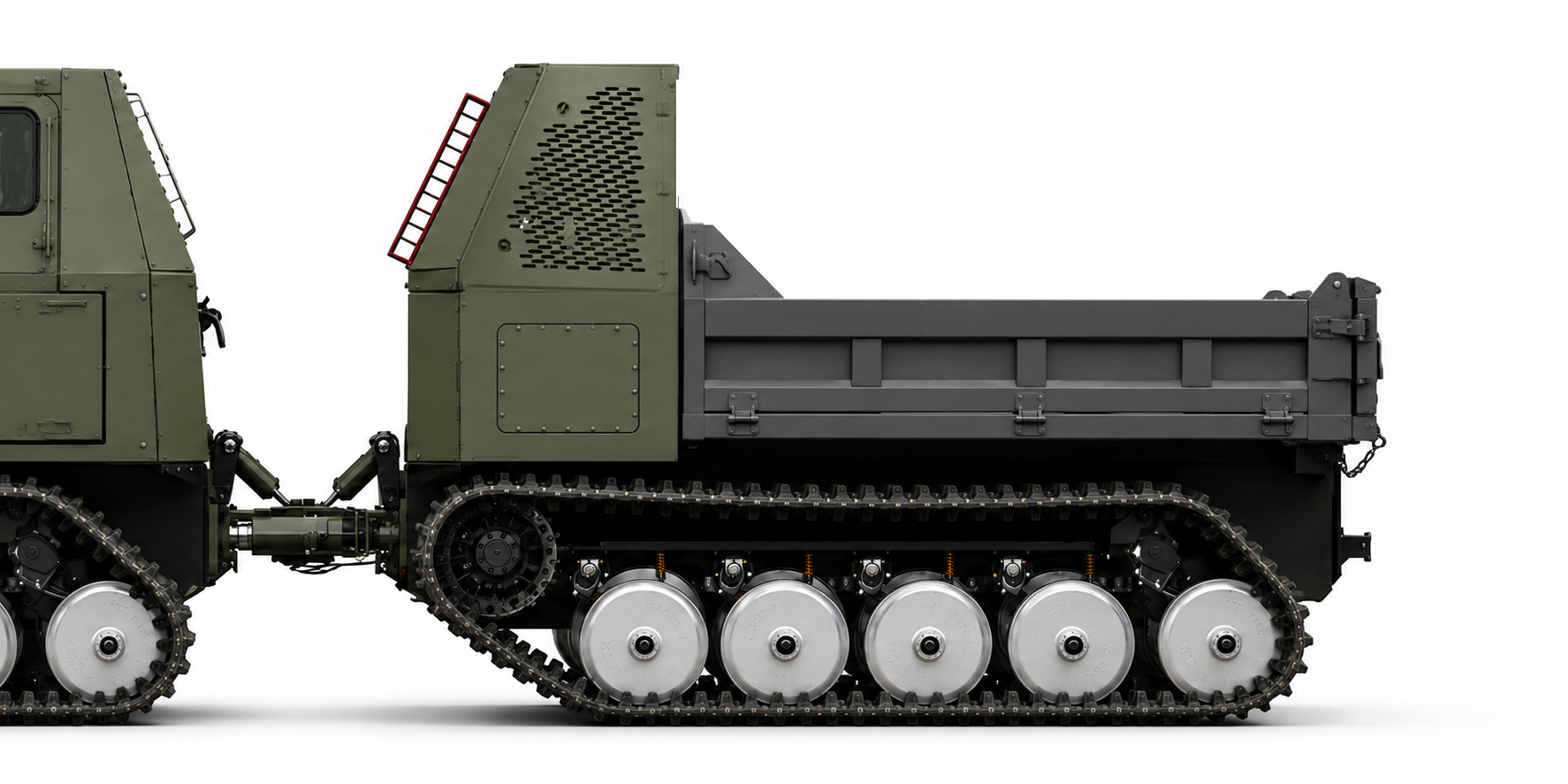
Modular Rear Mission Car
Using one base vehicle to switch modular units increases efficiency. A shared vehicle architecture across multiple rear-module configurations helps simplify fleet commonality, training, support, and long-term maintenance.
Next step
Capability briefings, demonstrations and industrial-partnership discussions for defence, government, public-safety and allied procurement teams.
Get in touch
Send us a short note and we will follow up. Or download the full introduction PDF for the Voyager D12 and C12 to review specifications, configurations and mission profiles.
PDF · UTV Voyager D12 & C12 — Introduction · UTV International, Montréal, Canada